Disclosure: We are not an Amazon Associate or an Etsy affiliate. Links go to third-party retailers as ordinary product links and earn us nothing. We chose these picks from our catalog without looking at commission, and we have not tested or rated them — what follows is what the listings state and what public guidance says. Prices and availability are set by the retailer. Full disclosure.
Public guidance is modest here: Ready.gov suggests a minimum of three days of non-perishable food per person, and builds toward two weeks. That modest goal is the best news in this guide. You do not need a bunker pantry. You need food people will eat, a way to cook it, and a place to keep it.
Three Tiers
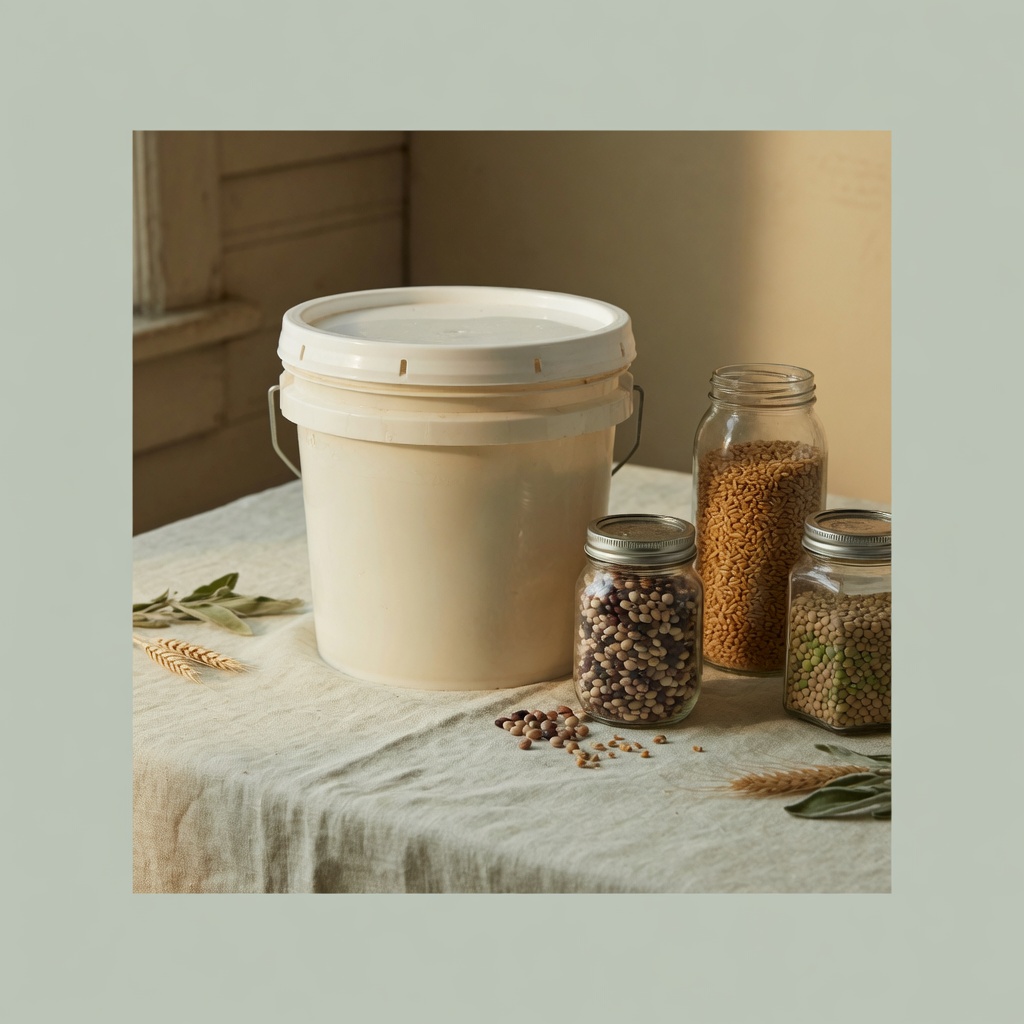
- Tier one: the bucket. Sealed, shelf-stable, built to sit. Good as a backstop, tiring as a diet.
- Tier two: the pantry. The food you cook now, a little deeper than usual, rotated oldest first. This is the one that works, because you notice it.
- Tier three: the tools. A pan, a heat source you can use safely, and a way to keep or make food over weeks.
Our 30-day pantry guide covers tier two in depth. This one is about what you might buy for the other two.
Read the Label Before the Brand
Emergency-food listings advertise a number of days or servings. Servings are defined by the seller. Before you pick a kit, open the product's nutrition panel and divide: what is the calorie count per serving, and how many servings does one adult need? Check the listed shelf life, check for allergens, and check what you must add (water, fuel, time). We cannot verify those from here; the listings can.
The Picks
Tier one: shelf-stable
- Augason Farms 30-Day Emergency Food Supply (Amazon) — the listing title states thirty days. Verify the per-day calories on the panel and who the "day" is sized for.
- Valley Food Storage 3-Month Emergency Food Kit (Amazon) — a larger kit by title. At this size, ask whether you have somewhere cool and dry to store it.
Tier three: tools
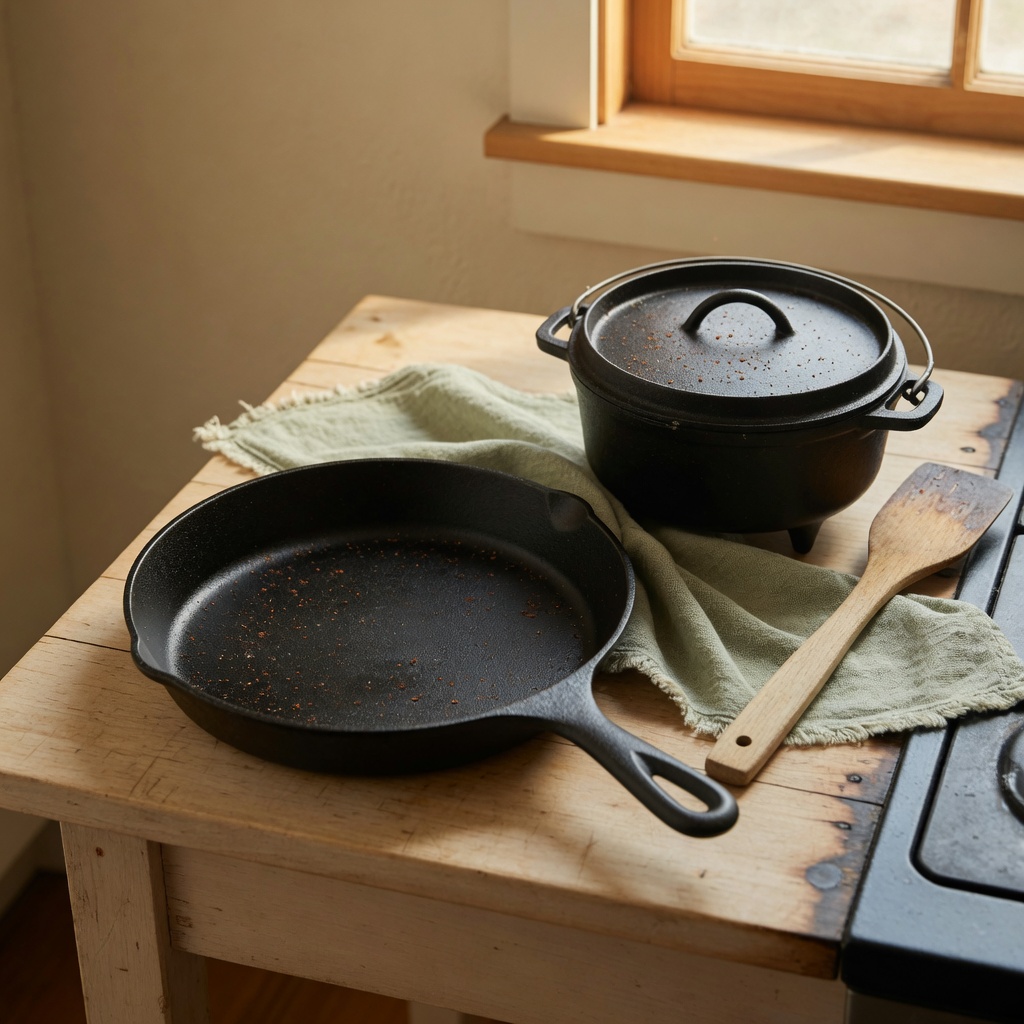
- Lodge 12 Inch Cast Iron Skillet (Amazon) — a plain 12-inch skillet. Cast iron works over a camp stove, grill or fire, but never burn charcoal or run a camp stove inside a closed space; the carbon monoxide is lethal.
- Griswold #3 Vintage Restored Cast Iron Skillet (Etsy) — a vintage piece restored by a seller. Read the description for how it was restored and whether the cooking surface is sound.
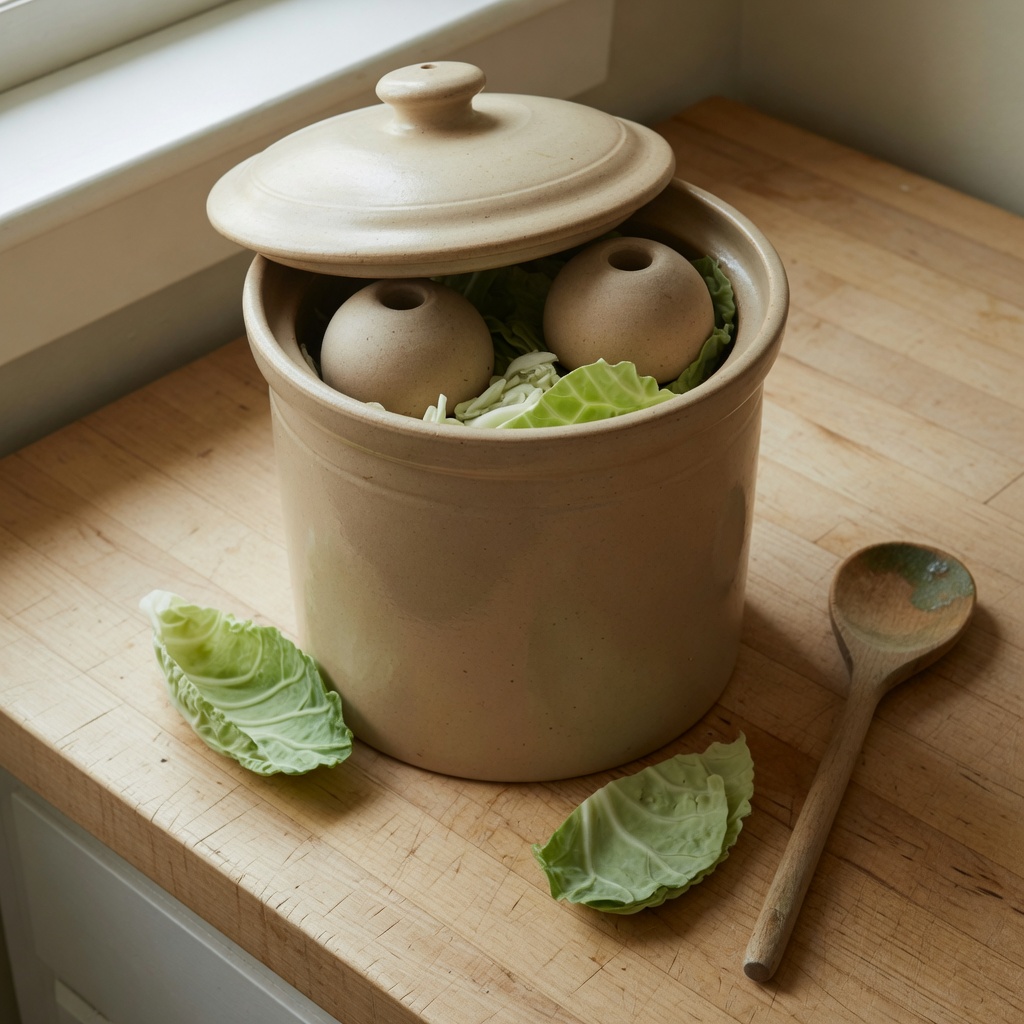
- Mortier Pilon 2L Fermentation Jar (Amazon) — a small jar for salt-brine vegetables. Use a tested recipe from a university extension service for salt ratios.
- Handthrown 1-Gallon Stoneware Fermentation Crock (Etsy) — a handmade crock; ask the seller whether the glaze is food-safe and lead-free.
A Sensible Order
Start by cooking one extra meal's worth of staples each week and writing the date on it. Add a skillet or pot you can use outdoors. If you want the backstop, buy one bucket and see whether anyone will actually eat it. Fermentation is a skill, not a purchase: practice with cabbage and salt before you depend on it.
The pantry is also a neighborhood asset. Our food pantry piece and the assessment show where the gap is.
Reading is a way of having. This post is a knowledge offering — thinner evidence than a practiced kit, thicker than an unread tab.