A refrigerator sips about 100 watts while it runs. A microwave gulps 1,000. A space heater, 1,500. Central air conditioning inhales 3,500 or more. Every backup-power decision you will ever make is hiding inside that one sentence, so let's read it slowly.
Know Your Watts Before You Shop
Backup power usually fails at the moment of purchase, not the moment of outage: people buy capacity with no idea what their house actually draws. Ten minutes with a $20 plug-in watt meter fixes that forever. For orientation, honest numbers from ordinary appliances:
- Phone: 10 to 15 watt-hours for a full charge — nearly nothing
- LED lamp: 8 to 10 watts; wifi router, about 10; laptop, 40 to 60
- CPAP: 30 to 60 watts through the night with the humidifier off
- Refrigerator: roughly 100 watts running, about 800 watt-hours over a day
- Microwave, kettle, space heater: 1,000 to 1,500 watts — the appetite cliff
- Central AC: 3,500-plus — a different sport entirely
Read the pattern: light, information, and medicine are cheap. Refrigeration is a real but payable bill. Heat made from electricity is ruinous. Design your buffer for the first two, and solve heating and cooling by other means — that's its own field guide, keeping comfortable without the grid.
Rung One: Light You Don't Think About
The first night of any outage is mostly a lighting problem, and it's solved for $50 to $100. One headlamp per person — per person, not one noble flashlight in a drawer — because light you wear leaves both hands free for the fuse box, the toddler, the pot. Add two or three LED lanterns for rooms, so the kitchen has light instead of individual people having light.
A pocket solar lamp and charger earns its windowsill year-round: it tops itself off in the sun all week and hands your phone a charge when asked. This rung carries evening one with grace. What it cannot do is keep milk cold.
Rung Two: The Battery Bank
The second rung is a small power station — 300 to 500 watt-hours, $300 to 500, the size of a lunchbox. Run the arithmetic against the numbers above and it's a quietly capable box: phone charges for the whole family for a week, a laptop through several workdays, the wifi router for a day or two (the internet often survives when the power doesn't), a CPAP for about three nights at 150 watt-hours a night.
What it cannot do is refrigeration. An 800-watt-hour daily appetite swallows a 500-watt-hour battery before dinner. Knowing that before the outage is the entire point of doing the math.
Rung Three: Quiet Power
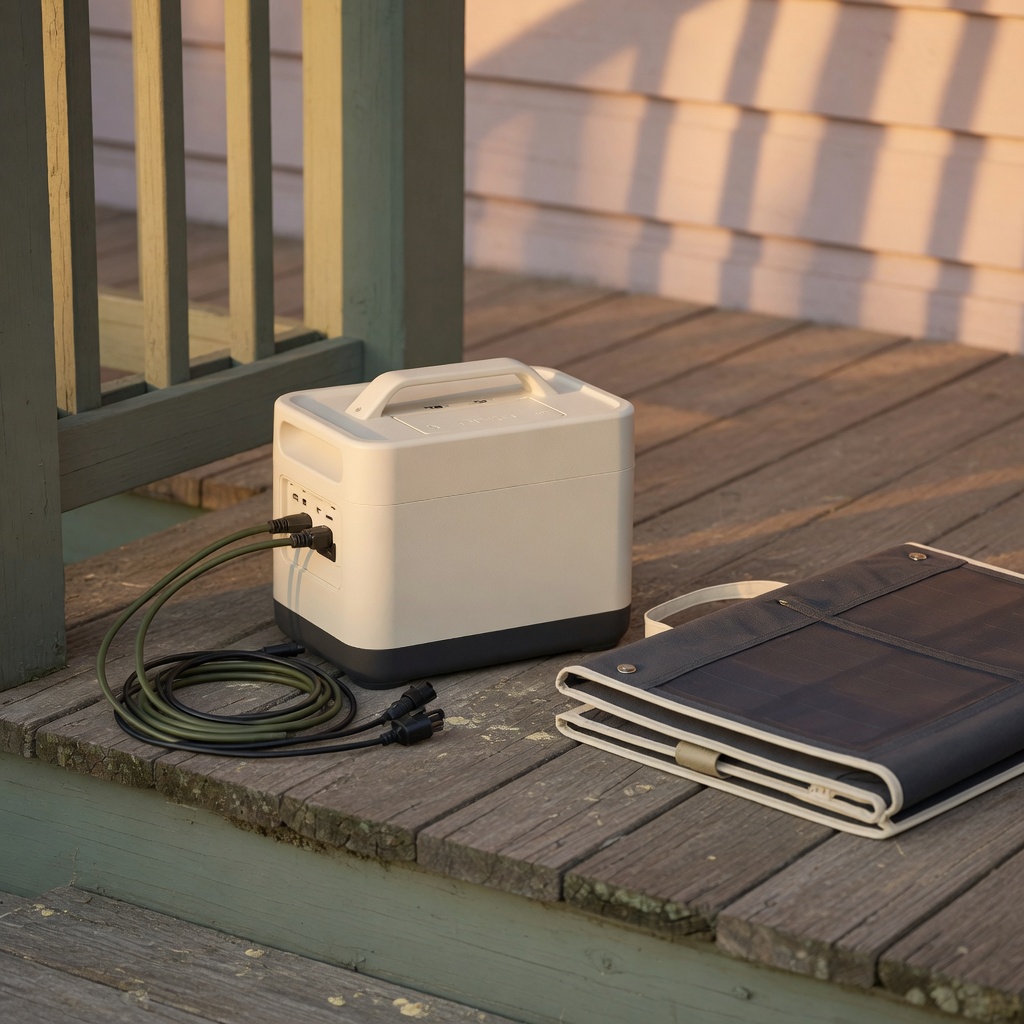
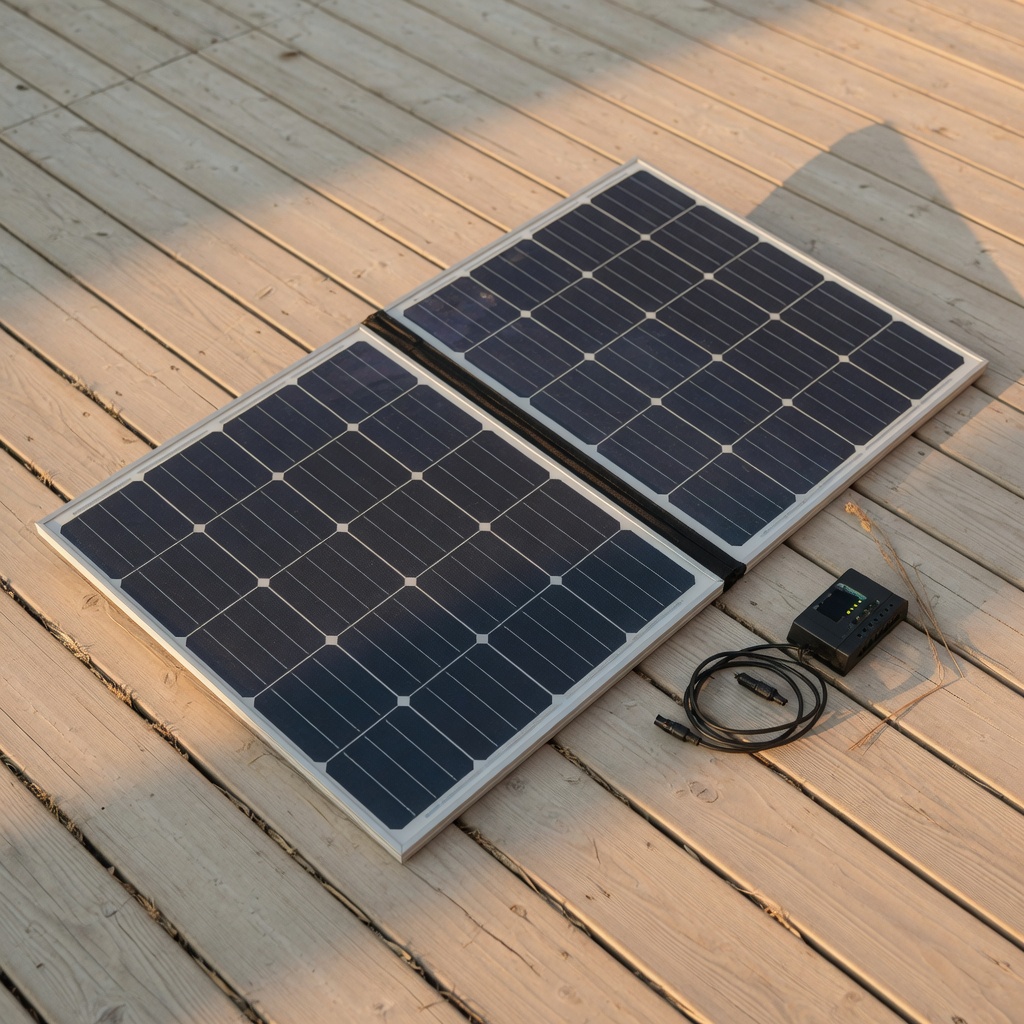
The third rung is where the buffer becomes real: a compact solar generator in the 1,000-watt-hour class, around $800 to $1,000, paired with a foldable 100-watt solar panel for another $200 or so.
Here's the honest arithmetic, provenance included. The fridge wants about 800 watt-hours a day. A 100-watt panel in good summer sun delivers 500 to 600; in winter, 200 to 300; under heavy cloud, maybe a tenth of its rating. So the panel doesn't fully carry the fridge — it stretches the battery, turning one stored day into three or four. Add discipline and the math improves again: a closed fridge holds safe temperatures for 4 to 6 hours, so cycling it — powered for twenty minutes an hour — cuts its appetite by half or more with no drama. Lights, phones, and the router ride along on the margins.
That's a 3-to-7-day energy buffer for roughly $1,200. And the crucial part: it shouldn't live in a closet. Run the drill saw off it in the driveway, power the projector for movie night in the yard, take it camping. Gear you use on ordinary Saturdays works on the bad Tuesday. Gear that waits in a box, historically, does not.
The Quiet Is the Point
A gas generator makes power and 85 decibels of loneliness. Behind that roar you can't hear a knock at the door, and the neighbors can't hear anything at all — a running generator is a wall of sound with a house behind it. A battery bank makes the same electricity at zero decibels, and quiet power turns out to be shareable power in a way loud power never manages.
An extension cord over a fence costs nothing. A power strip on the porch with a taped note — charge your phones, check on the Alvarez house — costs a dollar and turns your front steps into the block's town square by the second evening of any real outage. You will learn more about your street in one blackout evening than in a year of waving from driveways. If you can't yet name the three houses you'd run a cord to, start there — the cord is easier to run when the conversation already happened.
This Weekend
Borrow or buy a watt meter. Measure three things: the refrigerator, the router, and whatever medical device your household can't do without. Write the numbers on an index card and tape it inside a kitchen cabinet.
That card — not any purchase — is the beginning of your energy plan. From there the ladder is just arithmetic: light in every pocket, a battery for the small essentials, quiet solar power for the fridge and the porch. Climb one rung at a time, and use each one on a sunny weekend before you ever need it on a dark one.
Reading is a way of having. This post is a knowledge offering — thinner evidence than a practiced kit, thicker than an unread tab.