The finding that keeps repeating
In July 1995, a heat wave killed more than seven hundred people in Chicago. When the sociologist Eric Klinenberg mapped the deaths, he found something the hazard models hadn't predicted: two adjacent neighborhoods, nearly identical on paper — income, age, housing stock — with wildly different death rates. The difference wasn't equipment or wealth. The neighborhood where people survived at many times the rate of its twin had sidewalks people used, stores people walked to, block clubs, front stoops in service — neighbors who noticed an unopened door. It had, in the language nobody puts on a grant application, a social life.
Disaster research has kept turning up the same result ever since: the strongest predictor of how a street weathers a crisis is not what it owns but whether the people on it already know how to be together. Which leads to a strange, wonderful, slightly embarrassing conclusion — one of the highest-leverage pieces of resilience infrastructure available to your street is a games night.
What cards actually train
A monthly games night looks like leisure and functions like a drill, without the grimness of anything called a drill. Consider what two hours around a table actually rehearses:
- Names. The humblest capability and the bottleneck for every other one. You cannot coordinate with "the guy from the corner house."
- Turn-taking and losing. Games are conflict with the stakes removed. A street that has watched Dave lose at euchre gracefully — or watched him not — knows something true and useful about Dave before it ever has to share a generator with him.
- Who's calm. Under fake pressure you learn real temperaments: who keeps score fairly, who cracks jokes when the wheels come off, who quietly deals the new person in. That knowledge is exactly what a street draws on when the pressure stops being fake.
- The mixing. Kids and elders end up at the same table, which is where a street's memory and its energy actually meet. No other institution on your block reliably does this.
Trust built over a card table transfers to a storm with almost no loss. That is the entire mechanism, and it is why the shared meal is Terrarium's conversion event — games night is the meal's sibling: same trust, different table, and a much better excuse to be competitive.
How to run one that survives
The enemy of a games night is not disinterest. It's friction and specialness. Design both out from the start:
- Fix the date. First Friday, every month, forever. A recurring night nobody has to schedule beats a spectacular night somebody has to organize, every single time. Reliability is the feature; dazzle is optional.
- Anchor it. One dependable porch, garage, or kitchen. Rotating hosts sounds fair and works right up until the schedule dies of politeness. Volunteer your table for the first six months and see who catches the habit.
- Keep the bar on the floor. Show up, bring nothing, leave at nine. The moment attendance requires a dish or a dress code, half the street quietly opts out.
- Simple games win. Cards, dominoes, the loud dice games — anything explainable in ninety seconds to a tired adult and a nine-year-old at the same time. Save the four-hour strategy epic for the converted.
Two hours, once a month. That's twenty-four hours a year of practice at being a street, banked before anything goes wrong. And cancel only for weather that would cancel a barbecue — better yet, hold it by candlelight at least once, on purpose, and watch the practice quietly reveal itself as the real thing.
The shelf is a capability
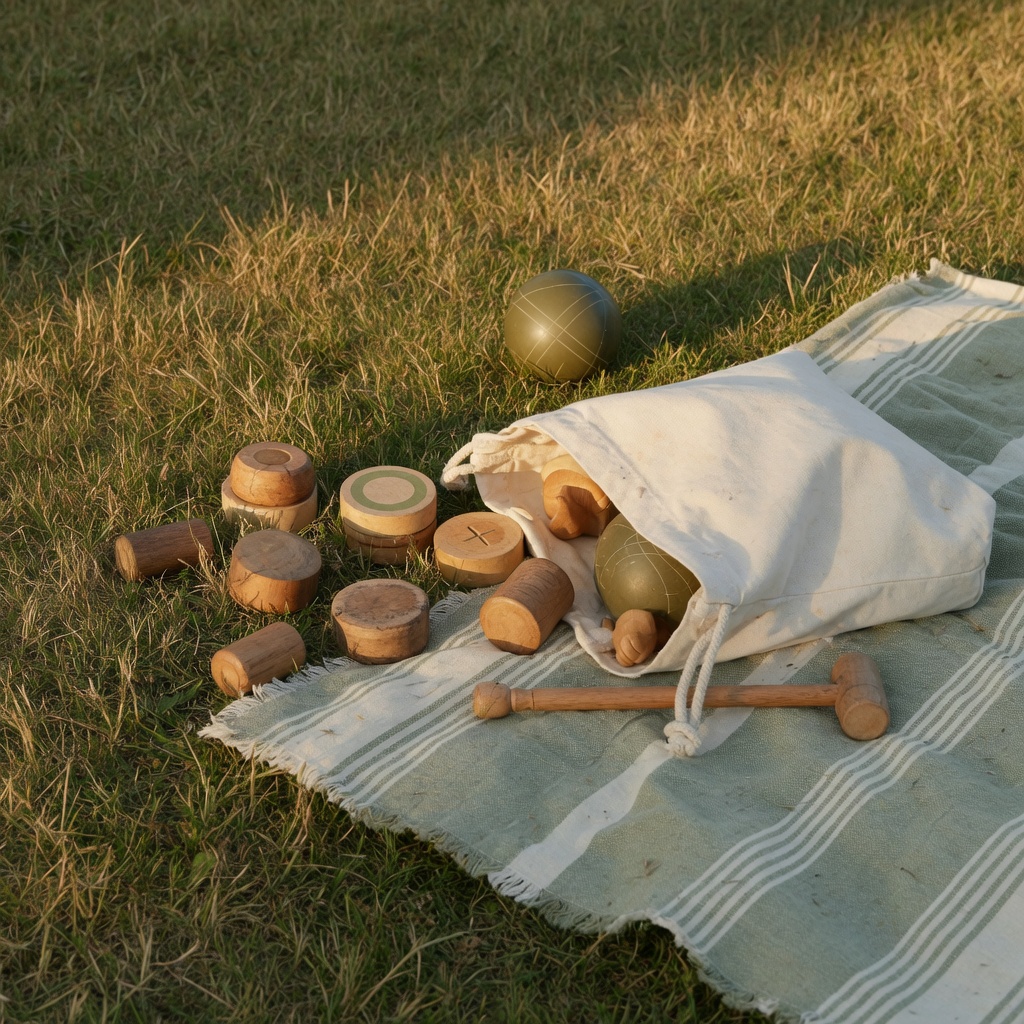
On your street page, the who-has-what inventory includes a line that surprises people the first time they see it: games and instruments for a power-out night, sitting in the ledger right beside generators and stored water. It's there on merit. A deck of cards is a fifty-hour entertainment system that draws zero watts, and the household willing to host a dark evening is holding capability as real as the household with the solar panels — arguably more transferable. So declare your shelf, and mark it shareable. If the shelf is thin, the Backyard Games Social Kit is our porch-ready, mixed-ages version — but a three-dollar deck of cards from the drugstore is a fully qualified starting inventory, and we mean that. An instrument counts double: the neighbor with a guitar has carried more long dark evenings than any power station we sell.
Why fun is on your readiness score
Culture and recreation is one of the twelve axes your Readiness Score actually computes over, counted with exactly the same weight as water or power. People sometimes read that as whimsy in the formula. It is the opposite of whimsy; it is the Chicago finding, turned into arithmetic. A street with deep pantries that only ever convenes in emergencies has no muscle memory to run on. A street with two years of first Fridays behind it never has to figure out how to convene, because it never stopped. When the score treats your games shelf as infrastructure, that's not a metaphor being generous. That's the model being accurate.
So pick the Friday. Text three neighbors the eleven words that start it — "cards on my porch, first Friday, seven o'clock, nothing fancy" — and put the kettle on. You are not taking a night off from getting your street ready. You are doing the part that makes every other part work.
Reading is a way of having. This post is a knowledge offering — thinner evidence than a practiced kit, thicker than an unread tab.