Disclosure: We are not an Amazon Associate or an Etsy affiliate. Links go to third-party retailers as ordinary product links and earn us nothing. We chose these picks from our catalog without looking at commission, and we have not tested or rated them — what follows is what the listings state and what public guidance says. Prices and availability are set by the retailer. Full disclosure.
Be warned up front about our own shelf: our catalog has no Amazon listings in the power category yet, and the Etsy ones are mostly small makers' work. This guide therefore includes retailers other than Amazon and Etsy, labels each one, and tells you where the gap is rather than papering over it.
Do the Arithmetic First
Battery capacity is quoted in watt-hours (Wh). A device's draw is in watts (W). Hours of runtime is roughly Wh divided by W, less losses from converting battery power to household current. Treat any result as a ceiling.
A worked example, using the capacity in one listing below: 1,070 Wh running a 60 W load comes to about 17 hours on paper. A 1,500 W space heater would drain the same battery in well under an hour. This is why the question to ask is not "what is the biggest unit I can afford" but "what must stay on." Our energy-buffer field guide lists typical appliance draws; a plug-in watt meter will tell you your own.
Why Not Just Buy a Gas Generator?
Sometimes you should. But the U.S. Consumer Product Safety Commission warns that portable generators produce carbon monoxide and must never run indoors, in a garage, or near windows. Batteries have no exhaust, are quiet, and can run in the kitchen. They also cost more per watt-hour and recharge slowly without a panel. That trade, not the brand, is the decision.
The Picks
Charging and light
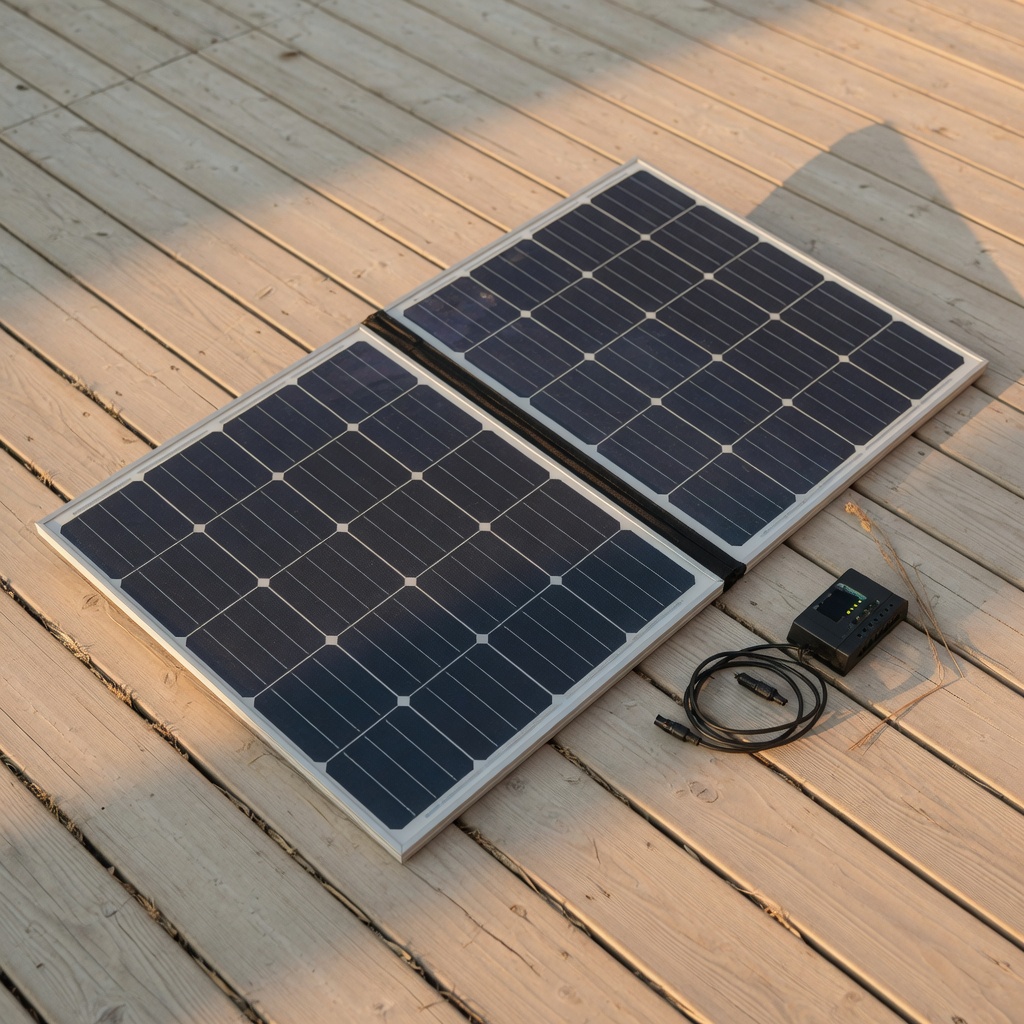
- Harbor Freight 100 Watt Super Lightweight Foldable Solar Panel (Harbor Freight) — a foldable panel sized for charging a power station on a sunny day. Check that its connector and voltage window match your battery before you buy.
- Outdoor Solar Lantern with Shepherd's Hook (Etsy) — read this one as garden lighting, not emergency lighting; it is in the catalog for its solar charging. A headlamp with spare batteries is a more reliable first-night light.
Battery stations
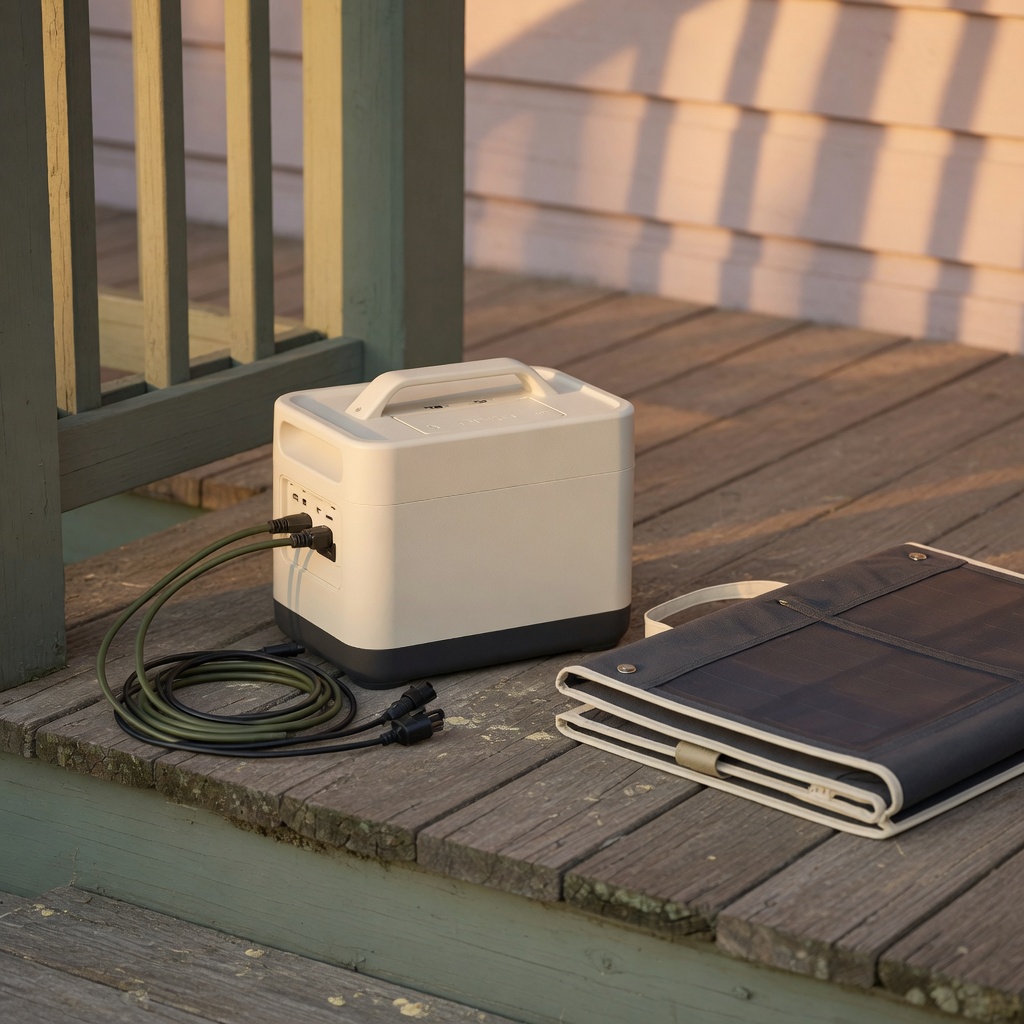
- Jackery Explorer 1000 v2 Portable Power Station (Best Buy) — the listing states 1,070 Wh. That is the capacity used in the example above.
- BLUETTI AC200L Power Station (Home Depot) — the listing states 2,048 Wh and 2,400 W output. Check its surge rating against the compressor in your refrigerator before counting on it.
- DIY Solar Generator Battery Box (Etsy) — a pre-wired inverter and charge controller box. Ask the seller for the battery chemistry and capacity before buying, and be honest with yourself about whether you are comfortable with DIY electrical work.
What We Would Not Buy For This
Decorative solar garden lights and "solar energy kits" for children appear in the same catalog category. They are fine for what they are, but they will not carry a household through an outage. Judge a product by watt-hours and by what it can actually run, not by the word "solar."
A Sensible Order
Run a week with a watt meter on your essentials. Add up the watt-hours your must-stay-on list uses per day. Buy a station whose stated capacity covers that with margin. Add panel capacity last, and only if you can set it in real sun. The panel is what turns a one-night buffer into a multi-day one, and it is the part most people skip.
See where your household stands on the energy axis, or read how the quiet end of the ladder helps a street in From Flashlights to Quiet Power.
Reading is a way of having. This post is a knowledge offering — thinner evidence than a practiced kit, thicker than an unread tab.