Disclosure: We are not an Amazon Associate or an Etsy affiliate. Links go to third-party retailers as ordinary product links and earn us nothing. We chose these picks from our catalog without looking at commission, and we have not tested or rated them — what follows is what the listings state and what public guidance says. Prices and availability are set by the retailer. Full disclosure.
This is not medical advice. It is a shopping guide. For anything serious, call emergency services; for your own conditions, talk to your clinician or pharmacist.
A first-aid kit is a box of materials. What makes it useful is the person who opens it. Before any purchase, the best-value item in home medical preparedness is a first-aid and CPR class from the American Red Cross or a local provider, and bleeding-control training such as the Stop the Bleed course. They cost little and nothing in a box replaces them.
What a Kit Is For
A kit handles the ordinary: cuts, burns, sprains, blisters, a splinter at the wrong moment. It extends your options by a few hours when help is slow. It does not substitute for a hospital, and a big count of "pieces" tells you little about how useful the contents are.
Read the Contents List
Piece counts are marketing. Open the listing's contents and look for: adhesive bandages in several sizes, sterile gauze pads and rolls, medical tape, gloves, antiseptic wipes, a thermometer, scissors or shears, tweezers, and a printed instruction card. Check expiration dates when the kit arrives and set a calendar reminder. Replace what you use.
The Picks
- Surviveware Small First Aid Kit for Survival (Amazon) — a compact kit by title. Good for a car or a bag; compare its contents list to the one above.
- Everlit 250 Piece Survival First Aid Kit (Amazon) — a larger kit by title, advertising 250 pieces. As noted, count is not quality; read what the pieces are.
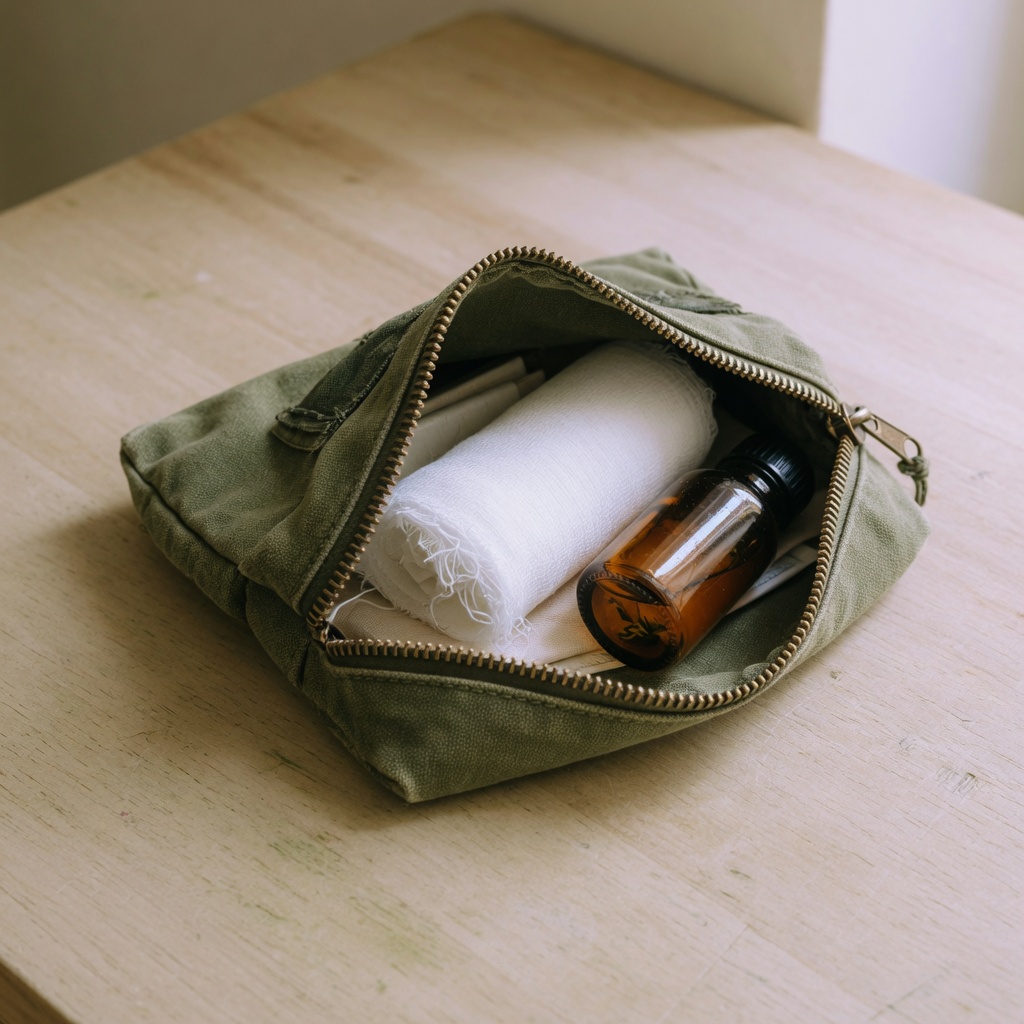
- Waxed Canvas Handmade Apothecary & First Aid Pouch (Etsy) — a handmade pouch. Confirm with the seller whether it ships empty or filled; a nice pouch is only a container.
What Goes Outside the Box
- Prescriptions: ask your pharmacist what your plan allows for refills in advance; rules vary. Never self-adjust doses to stretch a supply.
- A written list of each person's medications, allergies and clinician contacts, on paper.
- Over-the-counter staples your household already uses, checked for date.
- Anyone on powered equipment (oxygen, CPAP, refrigerated insulin) needs a specific plan; see our energy buffer guide and ask your supplier.
A Sensible Order
Book a class. Buy one decent kit for the house and a small one for the car. Read both lists, set the date reminder, and write down the paper list. Then learn who on your street has medical training, because the most useful item near you may be a nurse. Our home clinic piece goes further, and the assessment shows how you score.
Reading is a way of having. This post is a knowledge offering — thinner evidence than a practiced kit, thicker than an unread tab.